 My Korean Kitchen
Samgyetang (Ginseng Chicken Soup)
Save it, plan it, shop for it.
Supper turns recipes like this into a planned week and a sorted grocery list — then walks you through cooking, hands-free. Coming soon to iOS.
Ingredients
Serves 4- 1 Tbsp green onion (, thinly sliced)
- 4 whole garlic cloves (, peeled)
- 1.2 kg whole chicken
- 4 chest nuts ((optional), fresh or frozen, peeled if not already)
- 4 ginkgo nuts ((optional), peeled if not already)
- 1.5 liter water
- 1/4 cup sweet rice ((mochi rice or sticky rice), soaked in water for 2 hours (this can be done overnight and kept in the fridge))
- fine sea salt (, to taste)
- ground black pepper (, to taste)
- 1 ginseng (, dried or fresh Korean ginseng or American ginseng (I used 15 g of dried ginseng))
- 5 dried jujube
Open in Supper to scale servings and turn this into a grocery list.
Steps
- Step 1
Wash the chicken (including the cavity) thoroughly under running cold water.
- Step 2
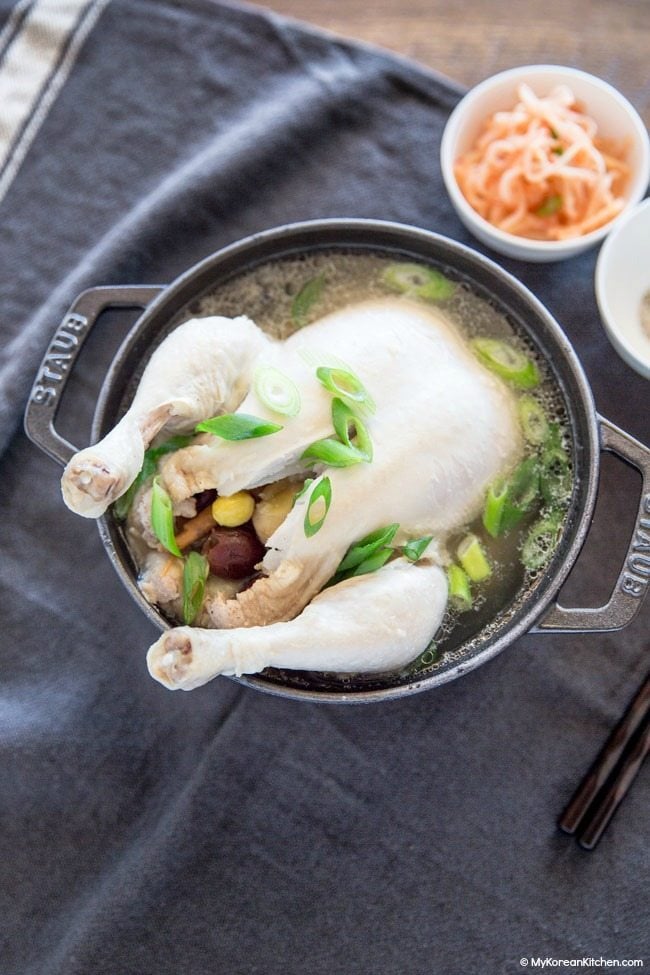
Stuff the chicken cavity with sweet rice, ginseng, garlic cloves, jujube, gingko nuts, and chest nuts. Cross the chicken legs and tie them with a cotton tie. Alternatively, you can make a slit on one side of the chicken thigh skin and put the other leg through it. (It sounds difficult but it’s not!) This is to minimise the stuffed ingredients falling out.
- Step 3
Pour the water into a large pot and add the stuffed chicken. Boil the pot over medium high heat, covered, for 20 mins. Reduce the heat to medium to medium low and boil further until the chicken is fully cooked (about 30 mins further). Also, make sure the stuffed sweet rice is fully cooked too. Skim off any scum as desired.
- Step 4
Transfer the chicken and the soup into a serving bowl. Garnish with the green onion and serve. Also, serve a small plate of salt and black pepper mixture (one plate per person). You can dip your chicken pieces into this sauce or add to your soup as desired. (Finally, don’t forget to serve some Kimchi too!)
Interactive, hands-free timers are available in the Supper app.
Wash the chicken (including the cavity) thoroughly under running cold water.
Source: My Korean Kitchen
